
Environmental Racism and the Uneven Heating of Our Planet
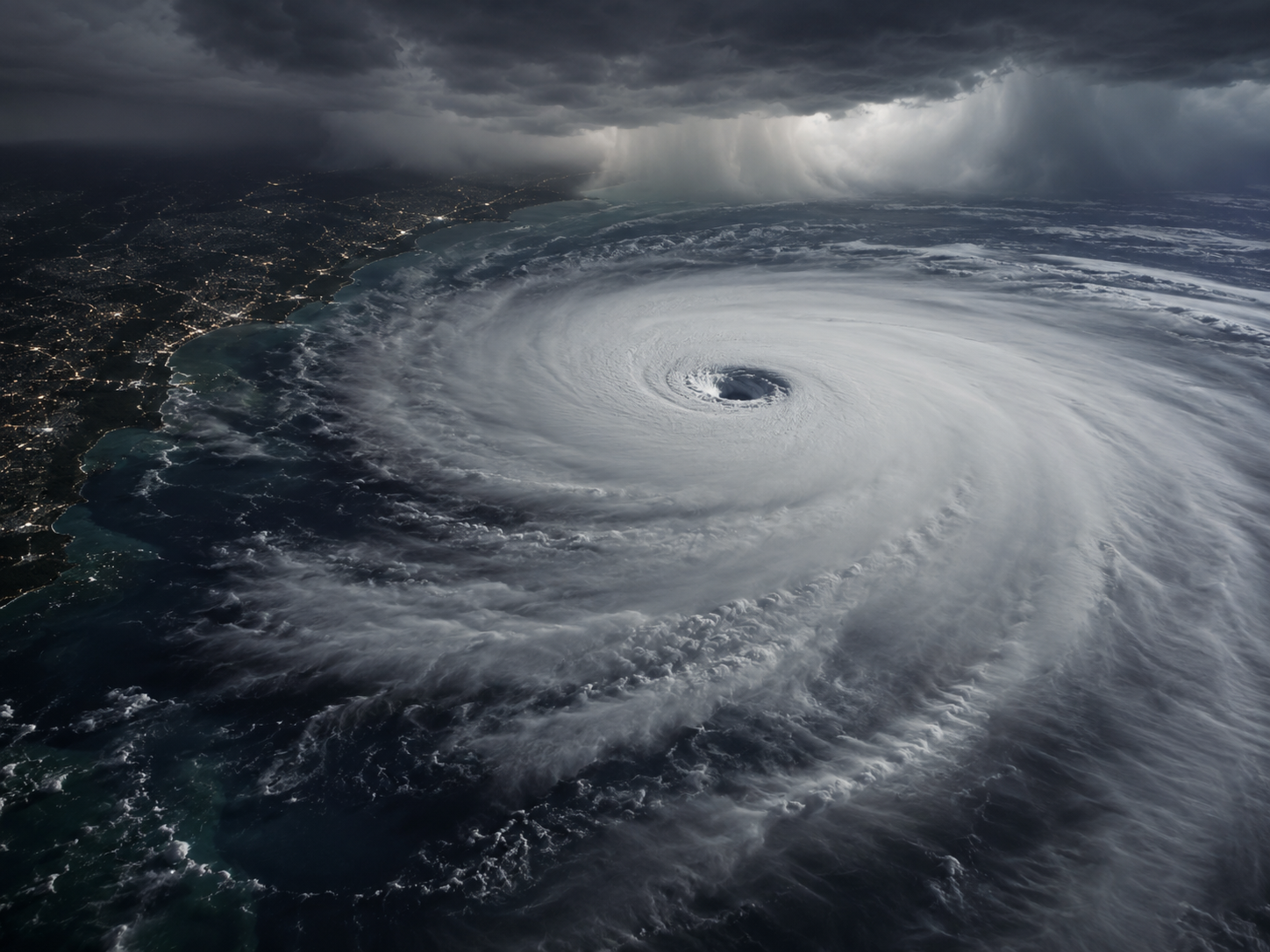
In October of 2024, Hurricane Helene ravaged North Carolina along with many other parts of the east coast. The storm cut deep inland and impacted areas that were previously thought to be impenetrable, wiping out entire towns and damaging utilities like power and water access. Natural disaster anomalies such as this are becoming more frequent, with climate change playing a major role in “raising [the] sea level” and producing “increased wind speeds” (USGS, 2025). Given the large black population in the south, this event reignited discussion as to the presence of environmental racism in the wake of tragedies like Helene. Historic examples of injustice in policy making and urban development have continued to harm communities of color. As a result, minority groups in the U.S experience discrimination in terms of impacts from climate change due to longstanding ingrained racism in American society.
First, it is important to understand exactly what is meant by the term “environmental racism.” This form of discrimination entails the unequal treatment of people based on their race and/or ethnicity in regards to environmental issues such as responses to natural disasters, environmental destruction/degradation, or access to quality shelter. Environmental racism usually occurs either in a response to an environmental issue which shows a lack of quality/effort or a culmination of financial setbacks from historic disenfranchisement which prevents minorities from having access to a clean and/or safe environment. An example of this comes from Alabama’s “Black Belt”, a region in the southern part of the state where most of the population is African American (Winemiller, 2009). The type of soil in parts of this belt is clay-like, making it more difficult to install proper septic systems for wastewater drainage. The necessary drainage system can cost as much as $30,000, but this steep price is often too much for homeowners, as the median income sat around $27,000 in 2016 (Flowers, 2019). This lack of access to proper drainage can lead to all sorts of problems, including exposure to wastewater containing pathogens and resulting infections. It can also lead to an increased risk of natural disasters like hurricanes, which can result in flooding. In terms of climate change, floods of this nature are only projected to increase in frequency and severity, as warming water temperatures and rising sea levels bring about stronger winds which means stronger hurricanes (USGS, 2025).
Instances like the septic systems in Alabama’s Black Belt are not new occurrences; they stem from years of unequal practices focused on minorities. An example of this is zoning, a practice which was created to help regulate aspects of neighborhoods for both safety and aesthetic purposes, such as “building heights” and who was allowed to use specific plots of land. These practices unfortunately “evolved” during the progressive era into tools that whites in power could use to force separation between themselves and minorities, allocating homes with poor living conditions to the latter, with little to no chance of improvement (Taylor, 150). With the limited upward movement for people of color in the market stifling any chances of economic mobility in the early twentieth century, many minority communities still see impacts today as their families haven’t been able to build up the savings to leave their neighborhoods.
Zoning couples with another tool called eminent domain, which allows the government to take “private property for public use” – a phrase which has been extended to fit projects like urban renewal (the renovation/reconstruction of buildings deemed unsafe or in poor condition) (Taylor, 228). While these government-facilitated renovations seem like a benefit for minority communities, they instead serve to further racial discrimination as compensation is often not enough to cover a new living arrangement. Essentially, minorities have been forced into homes with poor living conditions, only to then be removed by the government for said conditions and forced to find a new place with less money, while their previous home is either repurposed or rebuilt and listed at a higher price than they can afford. Practices like zoning and eminent domain make it difficult for many minorities to find a home that can withstand the abnormally severe and frequent weather events that result from increased global warming.
Beyond the resulting extreme weather patterns, the greenhouse gases that cause climate change hold a disproportionate impact on minority neighborhoods. Members of the University Hospitals Cleveland Medical Center performed a study in 2022 looking at the emissions of both NO2 gas and PM2.5 molecules of 8871 neighborhoods. Each of these neighborhoods had one of the four HOLC classifications from the 1930s (grades A-D). These grades were produced based on multiple factors such as the quality of the housing and environment the city was in, as well as the race/ethnicity makeup, with the grade decreasing as the number of white inhabitants decreased. This practice is called redlining, in which communities are refused “economic and social investment” opportunities based on their physical characteristics – in this case being refused loans (Motairek, Chen, Makhlouf, et. al, 519). In reviewing the findings, it was found that those neighborhoods with grades C and D had been historically exposed to a noticeably higher level of emissions in both categories (NO2 and PM2.5 molecules) (Motairek, Chen, Makhlouf, et. al, 522). Both types of emissions contribute to global warming as greenhouse gases which trap heat within the atmosphere and increase the surface temperature of the Earth. NO2 and PM2.5 molecules can also impact individuals exposed to them by inflicting damage to the respiratory system and causing breathing issues such as asthma (World Health Organization). Furthermore, the racially restrictive access to loans in lower grade areas restricts the financial availability of residence to either invest in improving living conditions or move to a different house/neighborhood. By doing so, a cycle is created where families lack the means to either escape from the environmentally compromised areas they have been forced into or invest in improving the safety of their homes against these environmental impacts.
Given the data, the next question likely to be asked is “How can this be fixed?” Between racist policies and lacking responses to environmental disturbances, minorities have been trapped in a cycle of environmental discrimination; they are targeted by unjust practices and lack the means to defend themselves from the consequences of global warming. To resolve this, efforts must be made on both fronts to remove the root of the issue (racist outdated policies) and the ways in which environmental racism exists today (specifically climate change and minimizing its impacts). The primary avenue for this is through education, specifically more research in the field of environmental injustice (along with a more nuanced focus). Research in this field is often conducted in relation to “large industrial facilities” like factories, rather than common “small facility” sources of emissions like gas stations or mechanic shops (Taylor, 280). Focusing research on these smaller facilities would allow for a better understanding of levels of exposure in smaller, less urban communities that aren’t as obviously impacted by large-scale institutions. Furthermore, different communities live in different environments and thus face different challenges. In focusing on smaller communities, solutions can fit the needs of specific communities better than applying an average from a large-scale survey to numerous different types of locations. This also promotes local involvement; people are more likely to get active on issues when the impact is more tangible and personal, both of which apply if the problem and solution are focused on their local community. By shining light on a lesser-known form of discrimination and continuing to educate the public, this branch of research will bring us one step closer to ending both environmental injustice and climate change for everyone equally.
I attest that this paper did not use AI at any stage in its development or in the creation of any of its components. – Jeremy Kemper
Works Cited:
Equal Justice Initiative [Flowers, Catherine], May 26th, 2019, EJI’s Catherine Flowers Testifies
Before Congress About Environmental Racism, https://eji.org/news/ejis-catherine-flowers-testifies-congress-about-environmental-racism/
Motairek, Issam, Chen, Zhuo, Makhlouf, Mohamed, Rajagopalan, Sanjay, Al-Kindi, Sadeer, April 2023, Historical neighbourhood redlining and contemporary environmental racism,
https://doi.org/10.1080/13549839.2022.2155942
Toxic Communities: Environmental Racism, Industrial Pollution, and Residential Mobility, b Taylor, Dorceta E., Toxic Communities, New York University Press, [2014]
USGS, February 7th, 2025, How can climate change affect natural disasters? https://www.usgs.gov/faqs/how-can-climate-change-affect-natural-disasters
Winemiller, Terance L., September 18th, 2009, Black Belt Region in Alabama, https://encyclopediaofalabama.org/article/black-belt-region-in-alabama/
World Health Organization, Air quality, energy and health, https://www.who.int/teams/environment-climate-change-and-health/air-quality-and- health/health-impacts/types-of-pollutants